Sunday, January 18, 2009

Prayer and the Sovereignty of God

Lately I have had some good conversations around the theology of the sovereignty of God and prayer. The Sovereignty of God is a term which means that all things are under God's rule and control, and that nothing happens without His direction or permission. God works not just some things but all things according to the counsel of His own will (see Eph. 1:11). His purposes are all-inclusive and never thwarted (see Isa. 46:11); nothing takes Him by surprise. The sovereignty of God is not merely that God has the power and right to govern all things, but that He does so, always and without exception. In other words, God is not merely sovereign de jure (in principle), but sovereign de facto (in practice).

People struggle with this, I struggle with this, because sometimes it seems like no one is in control of anything. But the Scriptural evidence is convincing: God is in control of everything that happens. There are a tone of issues that people have with this, and the reason for this post is not to address any of them accept how it relates to prayer. 

Someone said to me the other day: "If people are elect and predestined before the beginning of time to be Christians [Eph. 1.1-11; Rom. 9) what is the point of laboring to tell the world about Jesus, or even praying for people?" It is a great and weighty question - that needs both a complex and simple answer. Let me offer the thoughts of John Piper to answer both, a man who has written on, thought and preached more about this issue than any other, and who is thus disliked by many in the Christian world - but I think his thoughts here are worth sharing and at thinking about:


The assumption of the idea that prayer is pointless if God determines all things is that if prayer is to be effective at all man must have the power of self-determination. That is, all man's decisions must ultimately belong to himself, not God. For otherwise he is determined by God and all his decisions are really fixed in God's eternal counsel.


1. "Why pray for anyone's conversion if God has chosen before the foundation of the world who will be his sons?" A person in need of conversion is "dead in trespasses and sins" (Ephesians 2:1); he is "enslaved to sin" (Romans 6:17John 8:34); "the god of this world has blinded his mind that he might not see the light of the gospel of the glory of Christ" (II Corinthians. 4:4); his heart is hardened against God (Ephesians 4:18) so that he is hostile to God and in rebellion against God's will (Romans 8:7). 

Now I would like to turn the question back to my questioner: If you insist that this man must have the power of ultimate self-determination, what is the point of praying for him? What do you want God to do for Him? You can't ask that God overcome the man's rebellion, for rebellion is precisely what the man is now choosing, so that would mean God overcame his choice and took away his power of self-determination. But how can God save this man unless he act so as to change the man's heart from hard hostility to tender trust?

Will you pray that God enlighten his mind so that he truly see the beauty of Christ and believe? If you pray this, you are in effect asking God no longer to leave the determination of the man's will in his own power. You are asking God to do something within the man's mind (or heart) so that he will surely see and believe. That is, you are conceding that the ultimate determination of the man's decision to trust Christ is God's, not merely his.

What I am saying is that it is not the doctrine of God's sovereignty which thwarts prayer for the conversion of sinners. On the contrary, it is the unbiblical notion of self-determination which would consistently put an end to all prayers for the lost. Prayer is a request that God do something. But the only thing God can do to save a lost sinner is to overcome his resistance to God. If you insist that he retain his self-determination, then you are insisting that he remain without Christ. For "no one can come to Christ unless it is given him from the Father" (John 6:65,44).

PRAYERLESS vs. PRAYERFUL

Prayerless: I understand that you believe in the providence of God. Is that right?

Prayerful: Yes.

Prayerless: Does that mean you believe, like the Heidelberg Catechism says, that nothing comes about by chance but only by God's design and plan?

Prayerful: Yes, I believe that's what the Bible teaches.

Prayerless: Then why do you pray?

Prayerful: I don't see the problem. Why shouldn't we pray?

Prayerless: Well, if God ordains and controls everything, then what he plans from of old will come to pass, right?

Prayerful: Yes.

Prayerless: So it's going to come to pass whether you pray or not, right.

Prayerful: That depends on whether God ordained for it to come to pass in answer to prayer. If God predestined that something happen in answer to prayer, it won't happen without prayer.

Prayerless: Wait a minute, this is confusing. Are you saying that every answer to prayer is predestined or not?

Prayerful: Yes, it is. It's predestined as an answer to prayer.

Prayerless: So if the prayer doesn't happen, the answer doesn't happen?

Prayerful: That's right.

Prayerless: So the event is contingent on our praying for it to happen?

Prayerful: Yes. I take it that by contingent you mean prayer is a real reason that the event happens, and without the prayer the event would not happen.

Prayerless: Yes that's what I mean. But how can an event be contingent on my prayer and still be eternally fixed and predestined by God?

Prayerful: Because your prayer is as fixed as the predestined answer.

Prayerless: Explain.

Prayerful: It's not complicated. God providentially ordains all events. God never ordains an event without a cause. The cause is also an event. Therefore, the cause is also foreordained. So you cannot say that the event will happen if the cause doesn't because God has ordained otherwise. The event will happen if the cause happens.

Prayerless: So what you are saying is that answers to prayer are always ordained as effects of prayer which is one of the causes, and that God predestined the answer only as an effect of the cause.

Prayerful: That's right. And since both the cause and the effect are ordained together you can't say that the effect will happen even if the cause doesn't because God doesn't ordain effects without causes.

Prayerless: Can you give some illustrations?

Prayerful: Sure. If God predestines that I die of a bullet wound, then I will not die if no bullet is fired. If God predestines that I be healed by surgery, then if there is no surgery, I will not be healed. If God predestines heat to fill my home by fire in the furnace, then if there is no fire, there will be no heat. Would you say, "Since God predestines that the sun be bright, it will be bright whether there is fire in the sun or not"?

Prayerless: No.

Prayerful: I agree. Why not?

Prayerless: Because the brightness of the sun comes from the fire.

Prayerful: Right. That's the way I think about the answers to prayer. They are the brightness, and prayer is the fire. God has established the universe so that in larger measure it runs by prayer, the same way he has established brightness so that in larger measure it happens by fire. Doesn't that make sense?

Prayerless: I think it does.

Prayerful: Then let's stop thinking up problems and go with what the Scriptures say. Ask and you will receive. You have not because you ask not.

-----------------------

The point here is that the preaching of the gospel, and the praying that empowers it forward are just as predestined as is the believing of the gospel because as Paul says: "we are co-laborers with God" (1 Cor. 3.9) - God invites us, demands us to join in the missio dei (the mission of God).

God has promised to respond to prayer, and his response is just as contingent upon our prayer as our prayer is in accordance with his will. "And this is the confidence which we have before Him, that if we ask anything according to His will, He hears us" (I John 5:14). When we don't know how to pray according to God's will but desire it earnestly, "the Spirit of God intercedes for us according to the will of God" (Romans 8:27).

I find great comfort in the doctrine of the sovereignty of God. The book of Revelation gives a great image of this. In chapter five when the lamb who was slain (Jesus) walks up to the one on the throne and takes the scroll of history in his hand. The readers are supposed to understand, that while the world around them looks chaotic, and everyone is questioning control. Things are not a they seem. There is a lamb holding, controlling and directing history - He is sovereign, and everything that happens, including the Fall of humankind, is in accordance with his will (Eph. 1.11). 

As many questions as this raises, in the end it is biblical, and it is comforting in times of struggle.

Blessings to all those who need to hear that God is sovereign. 

Thursday, January 01, 2009

Benjamin Button on New Years Eve

It just dawned on me this morning; how ironic it was seeing Benjamin Button yesterday (Dec. 31). It is a movie all about time, growing old, regrets, forgiveness, life. Its is about the fact that a life is not summed up simply by adding up its number of years, so much more than just the ticking of time's clock, even the clock in the New Orleans train station which was deliberately set up to run backwards. The film is not meant to be believed in its scientific proposal that this could actually happen--though coming out on Christmas surely does allude to another amazing birth that defies science as well--it is meant as a metaphor for growing old and the tensions and struggles that come with it.

The movie really only has one gimmick, and that is Benjamin growing younger as everyone else grows older. It doesn't mean he lives longer than anyone else, it doesn't mean that is special in any ways beyond that--he doesn't invent something, meet presidents, or change history. It is a normal story of a life, love, pain, growing old, and of course one of its major themes is death. In the movie death is something that happens to all of us, its just a matter of time, and it is painful, but it is meant to be. As one character says to Benjamin "Death happens to those we love so we can appreciate how much they mean to us."

I felt that even bigger than the theme of death though was the theme of change. Throughout the movie the pain, struggle comes as a result of change--"Why does everything have to change, why can't it just stay just like this"; "I hate growing old"--things like that. Sentiments that are surely universal, and hit me hard. 

There is also the theme of forgiveness. People throughout the movie are encouraged to forgive those who wronged them: "Even if you are as mad as a mad dog, in the end you just have to let go"... Beautiful and true.

There are a few parallels here to Forrest Gump (same writer), but this movie is not trying to do the same thing at all. Where Forrest was a vehicle through which the audience experienced history, Button is a vehicle through which we are faced with the deepest questions of life, at the center of which is relationships. 

This is a good movie. Its long and could have been a little shorter but not much--maybe 15 mins--but its brilliantly executed from start to finish. Every frame is thought through and beautiful. In that way it reminded me of No Country for Old Men. You can just tell the director (David Fincher) casts a vision, and a team thought through every angle, color and background. I appreciate movies like this. 

Seeing this on New Years Eve was interesting; thinking about time, a clean slate, opportunities ahead, and ones missed in the past. It made me want to be a better husband, and better father. As I think about life and where its going my hope is that Jesus help me in doing what he himself commanded: to love God and love neighbor to the best of my ability to God's glory Matthew 22.37-39).

So rings true the words of Edith Lovejoy Pierce "We will open the book. Its pages are blank. We are going to put words on them. The book is called Opportunity, its first chapter is New Year's Day."

Monday, December 22, 2008

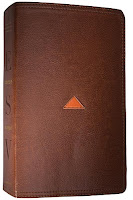
The ESV Study Bible


The other day I bought myself an ESV Study Bible - The one I got was $87.00, but if there is something I will pay good money for it is a Bible. This is a translation which I first was exposed to in 2003 (the year it was first published). My friend Brad and I were working at the annual gathering of the ETS (Evangelical Theological Society) in Toronto - we were working for InterVarsity Press (Free books and 10 bucks an hour you can't go wrong!) - It had just come out in a bland hard copy version - 

Interested in what it had to offer, we bought it and neither of us has regretted it. It has been helpful over the years - and has been becoming more and more a part of my study as the years have gone on. It is a great translation with many theologians and linguist at the helm which I respect including J.I Packer, Wayne Grudem, William Mounce, Greg Beale, and Craig Blomberg. The study notes are written by great biblical scholars such as Frank S. Thielman, Clinton Arnold, and Thomas R. Schreiner. Also three teachers from my school (Regent College) are responsible for the notes: V. Phillips Long (Joshua), Iain Provan (1 and 2 Kings) and J.I Packer who was the theological editor for the entire Study Bible.

On that note, J.I. Packer has said about his involvement with the Study Bible: "I find myself suspecting very strongly that this was the most important thing that I have ever done for the Kingdom" - This is a big statement from the person who wrote "Knowing God" one of the all time best selling, most read, most beloved Christian books of all time - and a classic in every right. (A must read for anyone reading this who has not bee blessed by its pages)

Also, Pastors such as James Macdonald, Mark Driscoll and John Piper have officially changed their preaching Bible to the ESV which says alot.  It is a good translation that balances linguistic faithfulness and contemporary readability. It is a good balance of being a "word for word" translation (think NASB) with meaning for meaning flow (think NIV, NLT) - with much needed corrections and updates to the NIV ("righteousness from God" in Romans? Where did the NIV derive such a concept? Its the "righteousness of God"!)
About a month ago they released the ESV Study Bible. I am excited, and in the words of Merry and Pippin from The Lord of the Rings "I'm getting one!" Well, as mentioned above I already got one. I found a list someone had written; 10 reasons why the ESV Study Bible is great. I thought I would share it with you as I agree with each point he makes:

___________________________________

1. It’s based on the English Standard Version, which is one of the finest and most faithful translations available today. While it’s always good to consult various translations for study, the ESV does a great job recognizing variants in translation in the footnotes.

2. The introductory notes to each book are informative and helpful, and don’t overwhelm you with interesting but non-essential background information.

3. The notes are extensive and answer questions I actually have about the text, without avoiding difficult passages.

4. The notes cover material that is not only helpful, but pastoral, aimed at helping me understand God’s Word better and as a result in growing in Christian faith.

5. The notes are well laid out. I’ve found them easy to follow along with the text.

6. The treatment of the first few chapters of Genesis is very even-handed and well-researched. The notes aim to give us an appreciation for the interplay of science and the Bible without giving ground on the ultimate authority of Scripture.

7. The focus is always Gospel-centered. The notes seek to answer the question, “Where does this section of the Bible fit into the larger story of God sending Jesus to redeem a people for his glory?”

8. The articles in the back of the Bible are almost a book in themselves (I’d love to see Crossway publish these separately), and address many significant issues clearly, briefly, and effectively. They include Biblical Doctrine, Biblical Ethics, Reading the Bible, The Reliability of Bible Manuscripts, The Bible and World Religions, and the History of Salvation in the Old Testament. In addition there are several additional articles between the Old and New Testaments that shed light on the inter-testamental period.

9. The maps and illustrations actually contain the cities, areas, and details I want to know about, and are placed close to the passages they refer to.

10. The notes don’t go beyond what the text says. They affirm what is clear, and plainly present different views when a word, phrase, or passage is unclear.

The only negative comment I’d make at this point is that the Bible is so big it’s hard to imagine carrying it around a lot. Unless I also want to use it as part of my exercise program.

But it’s a Study Bible, especially useful for personal devotions. I’m so eager to read through the ESV Study Bible that I’m setting a goal to read through the entire Bible with text notes by the end of 2009. It’s an ambitious goal, at least for me. The Bible and text notes come in at almost 2500 pages. Over 14 months, that’s about six pages a day, without missing a day. Like I said…it’s ambitious. But I’d rather aim high and fall short of my goal than aim low and miss it. I’ve found that I do better when I attempt a Bible reading plan that necessitates God’s grace than one that I can accomplish on my own.

__________________

Here is a list of endorsements from Christian leaders, Pastors and Theologians:

“I was privileged to act as General Editor of the English Standard Version, and now that I look back on what we did in producing that version, I find myself suspecting very strongly that this was the most important thing that I have ever done for the Kingdom, and that the product of our labors is perhaps the biggest milestone in Bible translation in certainly the last half century at least, and perhaps more. And now, as Theological Editor of the ESV Study Bible, I believe that the work we have done together on this project has set an altogether new standard in study Bibles.”
J. I. Packer, Professor of Theology, Regent College, Vancouver, Canada

“The ESV is a dream come true for me. The rightful heir to a great line of historic translations, it provides the continuity and modern accuracy I longed for. Now the scope and theological faithfulness of the ESV Study Bible study notes is breathtaking. Oh how precious is the written Word of God.”
John Piper, Pastor for Preaching and Vision, Bethlehem Baptist Church, Minneapolis, MN

“The ESV Study Bible is the most important resource that has been given to the emerging generation of Bible students and teachers. The ESV Study Bible is the best. Period.”
Mark Driscoll, Preaching Pastor, Mars Hill Church, Seattle, WA; President, Acts 29 Church Planting Network

“The definitive clarity and beauty of the ESV Study Bible is extraordinary. In a world where words are distorted to mean anything, it is wonderful to have complete confidence in the reliability and truth of the Bible—so clearly and persuasively demonstrated by this world-class team of Bible scholars and teachers. For everyone who wants to understand God’s Word in a deeper way, the ESV Study Bible is an outstanding resource. I will be an avid user!”
Joni Eareckson Tada, Founder, JAF International Disability Center, Agoura Hills, CA

“Outstanding! The ESV Study Bible is a treasure—a beautiful volume, filled with a wealth of resources. It will be just as useful for the seminarian and long-time pastor as it will be accessible to the brand-new Christian.”
R. Albert Mohler Jr., President, The Southern Baptist Theological Seminary, Louisville, KY

“Wow! Concise, lucid, enlightening—the ESV Study Bible is an amazing resource. With its textual fidelity, doctrinal substance, and artistic beauty, the ESV Study Bible will be an immense help to all who hunger for God-breathed Scripture. I wholeheartedly recommend this exceptional resource.”
Randy Alcorn, bestselling author of Heaven and Money, Possessions, and Eternity

Sunday, December 14, 2008

Christmas Theology: The Virgin Conception


One of the seminal miracles in all of the Bible, is the virgin birth, and it bears some close scrutiny especially at this time of year. In fact, the miracle of Christmas has several components, but none more crucial than the miracle of the virginal conception which presents us with an explanation as to how the Incarnation happened. Several preliminary points need to be stressed.


Firstly, there are no real parallels to this story, despite the ‘Zeitgeist-ites’ contentions to the contrary. Mary of Nazareth was a historical person, unlike stories about Isis which are pure myths about mythological deities, not mere mortals. Furthermore, the mythological stories about the divine rape of a mortal woman by some male deity (cf. the story in Gen. 6.1-4 about wicked angels) are very different than the story of the virginal conception which stresses there was no intercourse with any kind of male, whether terrestrial or celestial. Then too, the stories about Caesar or other Emperors having divine origins besides being imperial propaganda (which even Romans recognized as pure P.R.) do not involve virginal conceptions. Finally, there are no comparable earlier Jewish stories. For example the stories about Moses’ origins (either canonical or extra canonical) do not include the notion of a virginal conception.


Secondly, it needs to be stressed that Isaiah 7.14 while patient of the interpretation that it refers to a virginal conception, was never interpreted that way before the time of Mary of Nazareth. Why not, because a literal rendering of the Hebrew there is as follows “an almah will conceive and give birth to a child…..”. The normal translation of almah is ‘a young nubile woman of marriageable age. Now, in an honor and shame culture, this would normally include the conception of the virginity of the woman, and thus we should not conclude that the translation of almah is incorrect, when it renders the word as parthenos ("virgin"). The latter is a term with a more limited semantic field, focusing more clearly on the virginity of the woman. 


Even so, what Is. 7.14 and in particular “a virgin will conceive and give birth to a child” seems to have been understood to mean in early Judaism was that a woman who was a virgin would conceive by the normal means and give birth to a king. In short, no one seems to have been looking for a virginally conceived messiah in early Judaism. And this leads to an important conclusion—it was the unexpected event in the life of Mary that led latter Christian interpreters to search the OT and interpret Is. 7.14 as they did (see Mt. 1-2). 


ASIDE: A guy once called me and challenged me on this interpretation, "Mark,  the Hebrew Bible only pictures a young maiden and thus Mary was not a Virgin!" I pointed out that he should not base the whole argument about her virginity on the Isa. text but on Matthew, who twice tells us that Joseph never had sex with Mary until after Jesus was born (1.18, 25) - I asked if he was willing to believe the alternative, that Mary was sleeping around with other men then Joseph. He was not.


The claims that the story of the virginal conception is an example of prophecy historicized, rather than being a reflection on an actual historical event, won’t work because Jews did not read that prophecy that way. On the contrary, it was the actual historical event that led to the re-evaluation of OT prophecies, including in particular Is. 7.14.


There are further problems with the contention that this story is not historical, namely in an honor and shame culture like early Judaism, and when we are talking about a religion that was evangelistic in character, no one in their right mind would make up a story about a virginally conceived messiah, because the skeptical would immediately conclude that what the real story was that Jesus was illegitimate, and in fact we know that that was the rebuttal in second century Judaism, with the suggestion being made that Mary was impregnated by a Roman soldier named Pantera or Panthera.


We can see the difficulties of explanation that were presented to a Gospel writer like the Jewish Christian who wrote Matthew almost immediately. How in the world does one squeeze Jesus into Joseph’s genealogy, as is done in Mt. 1, whilst maintaining that Joseph was not the biological father of Jesus? The genealogy in Mt. 1 is a patrilineal genealogy, a genealogy of begats, basically, which means you are tracing the line through the male descendents of King David and even before that of Abraham. The answer is--- you put Mary into Joseph’s genealogy!


And you prepare for that little surprise by mentioning in passing other women who had surprising or irregular unions with Jewish males from Israel’s past--- women like Tamar, or Rahab, or Bathsheba. Notice how the genealogy concludes---- ‘Joseph, whose wife was Mary, who bore Jesus….’ And then the author goes on to explain that if Joseph had not been alerted in a visionary dream to marry Mary even though she was already pregnant, Jesus might never have been part of a patrilineal genealogy going back to David at all. In other words, the actually historical occurrence of the virginal conception is what causes all remarkable these genealogical gymnastics. The story of the virginal conception is a story too improbable not to be true, as an ambitious evangelical religion in an honor and shame world would not make up a story prone to all sorts of negative alternative appraisals. The possible punishment for pregnancy out of wedlock by a betrothed virgin was stoning. The virginal conception imperiled Mary’s very life, and it is no wonder that she took a little trip to see her cousin for various months immediately after the shock of becoming pregnant in a highly irregular manner.


Thursday, November 27, 2008

The Tipping Point & The Gospel

just finished reading Malcolm Gladwell's The Tipping Point. Its a great book. Its a book about a lot of things. Its helps us realize a basic biblical principle as well: little things matter because they lead to big things. Its why God took away the kingship from Saul (because he didn't wait for Samuel). Its why God didn't let Moses go into the Promised Land (because he hit a rock with a staff instead of speaking to it). Its the little things. The little things are everything.

The Tipping Point revolves around the little things as they relate to social epidemics. Gladwell defines the Tipping Point this way:
It's the name given to that moment in an epidemic when a virus reaches critical mass. It's the boiling point. It's the moment on the graph when the line starts to shoot straight upwards. AIDS tipped in 1982, when it went from a rare disease affecting a few gay men to a worldwide epidemic. Crime in New York City tipped in the mid 1990's, when the murder rate suddenly plummeted. When I heard that phrase for the first time I remember thinking--wow. What if everything has a Tipping Point?

 He says there are three things that cause something to 'tip':

(1) The Law of the Few: "The success of any kind of social epidemic is heavily dependent on the involvement of people with a particular and rare set of social skills." Gladwell describes these people in the following ways:

Connectors are the people who "link us up with the world ... people with a special gift for bringing the world together." To illustrate, Gladwell cites the midnight ride of Paul RevereMilgram's experiments in the small world problemDallas businessman Roger Horchow, the "Six Degrees of Kevin Bacon" trivia game, and Chicagoan Lois Weisberg

Mavens are "information specialists", or "people we rely upon to connect us with new information." They accumulate knowledge, especially about the marketplace, and know how to share it with others. 

Salesmen are "persuaders", charismatic people with powerful negotiation skills. They tend to have an indefinable trait that goes beyond what they say, that makes others want to agree with them. Gladwell's examples include California businessman Tom Gau and news anchor Peter Jennings, and he cites several studies about how people are persuaded.

(2) The Stickiness Factor: the specific content of a message that makes it memorable and have impact. The children's television programs Sesame Street and Blue's Clues are specific instances of enhancing stickiness and systematically engineering stickiness into a message.

(3) The Power of Context: Human behavior is sensitive to and strongly influenced by its environment. As Gladwell says, "Epidemics are sensitive to the conditions and circumstances of the times and places in which they occur." For example, "zero tolerance" efforts to combat minor crimes such as fare-beating and vandalism on the New York subway led to a decline in more violent crimes city-wide. Gladwell describes the bystander effect, and explains how Dunbar's number plays into the tipping point, using Rebecca Wells' novel Divine Secrets of the Ya-Ya Sisterhoodevangelist John Wesley, and the high-tech firm Gore Associates.

For a Christian and a Pastor I think this book works in a number of important ways. The most important social epidemic in history is the Gospel of Jesus. I read this book asking: How do we use these basic principles of a spreading epidemic (obviously under the Lordship and Sovereignty of God) to spread the Gospel? How do we use the Law of the Few--focused on connectors? How do we use the stickiness of the message and the methodology of Gospel-centered living? How do we use the power of context including church communities and their personalities, attitudes, and behavior for the spreading of the message of Jesus?

Such is the challenge to the Church. How do we make the Gospel the fastest growing epidemic to effect change for the glory of God?

Monday, November 17, 2008

saints and SINNERS


A few weeks ago we, as a church community, starting a study in 1 & 2 Samuel (at DSF, our churches evening service) - the story of the life of David. I knew I wanted to do this series for awhile, I just didn't know what angle to come at it from. I prayed and thought around the text for some time, thinking about a series title that would capture what 1 & 2 Samuel is about, but something directly applicable to our lives. The series title, and angle, dawned on me one day while driving. It is an idea so elemental to being human: the biblical fact that we are both fundamentally saints and sinners. I did not really realize at the time how deep this title was, and how it would go on to shape so much of what I and others would be living through as we have been studying the text together.

We live schizophrenic lives as human beings. We have great moments where we act like we were intended: helping, serving, loving, worshiping. But at the same time, in the same day, hour or minute we do the most evil, selfish things. The week we started the series someone dropped cookies off telling me how much I blessed them, and the next day I got a call from a friend who was, with good reason, angry at me because I had shared something with someone that I should not have. I was reminded that being human is hard work, and that I am a saint and a sinner.

How are we saints? We are made in the image of God (Gen 1.16-28). We have attributes that are like God: Goodness, Love, Justice, Creativity. Theologians call these the
Communicable Attributes of God. Attributes communicated to humans. This is the only reason we are capable of any thing that remotely resembles goodness. This is due to the common grace of God. There are also Incommunicable Attributes of God: Perfection, Unchangeableness, Omnipresence. The Bible reminds is that while we are made in his image, we are not him.

How are we sinners? We fell (Gen 3). We are deeply effected in every part of ourselves by sin and death. We are
totally depraved. Capable of no good and pure thing (Rom 3.10-18). We are corrupt in the deepest parts of ourselves. This is important to understand. Total depravity is often a misunderstood doctrine, as if it is saying that human beings are as bad as they possibly could be. But this is not true. The doctrine indicates the extent of evil in our lives; that evil has touched, and harmed, every part of us: "our moral natures, rationality, sexuality--our very view of the world and our most fundamental motives" (John G. Stackhouse Jr., Making the Best of It, 49)

Bring these two aspects of ourselves together and you get a person who is subject to the ways of the fallen world and somehow connected to something that transcends himself. In his book
The Nature and Destiny of Man, celebrated theologian Reinhold Niebuhr, says:

“The obvious fact is that man is a child of nature, subject to its ways, compelled by it necessity, driven by impulses, and confined within the brevity of the years which nature permits its varied organic forms. The other less obvious fact is that man is a spirit who stands outside of nature, life, himself, his reason and the world. In its purest form the Christian view of man regards man as a unity of God-likeness and creature-liness in which he remains a creature even in the highest spiritual dimensions of his existence.”

Life is about living in the midst of the tension this reality creates. We live between these two poles. Two weeks ago I started the sermon with a clip of Gollum/Smeagol arguing with himself and said that of all the
LOTR characters, the Bible tells us we should most immediately identify with him. We are Smeagol, God's creation, beautiful and full of potential. But all of that potential has been corrupted by our sinfulness. We are deeply messed up people. Deeply sinful. Liberals tend to focus on the saint part, and ignore the sinner part of ourselves. Fundamentalists tend to focus on the sinner part and marginalize the saint part of ourselves.

As I reflect on the Bible, think about my life, and the lives of those I pastor I have come to conclude two disturbing but liberating truths about being human. First, our default position is never Jesus. Because we are born into sin, our natural proclivity is toward sin, and the father of all lies, Satan. Our nature is to be turned in on ourselves. That is why the Reformer Martin Luther defined sin as
Homo incurvatus - mankind turned in on himself. Our heart is curved away from God. "There are none who seeks for God" (Rom 3.11). We begin not where Adam started but where he finished. Disobedient, selfish, sinful, disconnected from God.

Second, we all have the potential to be the next murderer, thief or adulterer. I am not sure we believe this. I am not sure we have all come to terms with the fact that we all have the potential to be the next Hitler, Pol Pot or Stalin. What makes them different than you? Were they born twisting their mustache's hatching plots to destroy the world? No. They were once helpless babies dependent on their mothers; playing with friends and siblings; asking the same questions we all ask, feeling the same pain we all feel. The reality is, they were sinners, just like all of us, and the same weakness that ran through their veins runs through each one of us. Two use a cowboy image, there are no white hats and black hats. There are only black hats. The only white hat to ever have entered the earth was that worn by Jesus.

Alexandr Solzhenitsyn put it this:

"If only there were evil people somewhere insidiously committing evil deeds, and it were necessary only to separate them from the rest of us and destroy them. But the line dividing good and evil cuts through the heart of every human being. And who is willing to destroy a piece of his own heart?"

The potential for great sinfulness runs through the hearts of every human being. We are all guilty before a holy God. Still, I don't think you believe me. You don't really believe you could be the next murderer do you? If you don't believe that, than you have missed the message of the Bible. Last night I preached about Saul. He ended poorly. We all have that potential. Many connect Saul with Judas - betrayer, suicide etc., What makes you better than either of these men? 

We all have the potential to be Judas. In a sense we are already Judas... every day. Some of us every hour.

Listen to the story Jesus told about people who think they are not Judas or Saul or evil at all:

To some who were confident of their own righteousness and looked down on everybody else, Jesus told this parable: 10"Two men went up to the temple to pray, one a Pharisee and the other a tax collector. 11The Pharisee stood up and prayed about himself: 'God, I thank you that I am not like other men—robbers, evildoers, adulterers—or even like this tax collector. 12I fast twice a week and give a tenth of all I get.'

"But the tax collector stood at a distance. He would not even look up to heaven, but beat his breast and said, 'God, have mercy on me, a sinner.' "I tell you that this man, rather than the other, went home justified before God. For everyone who exalts himself will be humbled, and he who humbles himself will be exalted." (Luke 18.9-14)

Do you view yourself as utterly sinful before a holy God, no more righteous than anyone on the earth? 

This is the only way to come into the Kingdom. As a child. Humble. Not boasting of any good thing. Asking God to forgive you and apply to you the righteousness of Jesus, because you have no righteousness of your own to offer.

Believe it.

Not to be overly dramatic but the reality is living in light of this is the only way to move forward and makes sense of your life.

Tuesday, November 11, 2008

SELAH: Remembering...


One of the key roles Torah (the five books of Moses) played in Israel's history was to help them practice dense memory while living in pagan cultures--to remember. While living in Babylonian exile they would read Genesis and Exodus to remind themselves that those surrounding narratives were not true, and that  they served the one true God of all the world; YHWH, who had made them and liberated them from Egypt. One of its key roles was the role of helping Israel to remembering

Remembering is integral to what it means to be human. To stop and remember and to dwell deeply on the past, to put the present into context and help us move forward into the future. The Hebrews have a great word that captures the idea of stopping and contemplating something deeply--SELAH. We read it in the Psalms many times. SELAH is a liturgico-musical mark--an instruction on the reading of the text, something like "stop and listen". This word occurs seventy-one times in thirty-nine of the Psalms, and three times in Habakkuk 3. Its a beautiful concept that we in the West have to be forced into sometimes. Days like today are good reminders. A forced and instructed SELAH--"stop and listen"--in the context of a Canadian Stat Holiday. Add to this the idea of Torah (remembering). 

What are we remembering? The selfless sacrifice of those generations that fought and died in two horrific wars to allow us to help others. They fought against oppression and fascism, and for Canadian freedom and democracy--ideals that continue to be fought for around the world today. This day is about remembering the fallen. It is not about using this day on either side of the present political debate about whether we agree, or disagree with present wars, or even whether we agree or disagree with WWI and WWII (there are those who think these wars were illegitimately fought by the West, though I disagree). But this day is not about that, it is about remembering the fallen, who fought and died for the freedoms and blessings we enjoy today, including many of our grandparents.

Why is Remembrance Day continuously important? Because, one day in the not so distant future all those who lived through, and fought these wars will be dead. All those who lived through the Holocaust will be gone. All those who lived through Nazi Germany will be gone. All those who landed in Normandy will be gone, and all we will have is stories, pictures, film and memories. All we will have is the will to remember. All we will have is a forced stop and listen, a SELAH of Remembrance. And that is what this day is about.  

Thursday, November 06, 2008

Two Great Books!

I just got off the phone with a mother whose child is dating a real thinker, and a skeptic. She regretted that he did not attend my lasted sermon series Skeptics Forum (available online or Podcast) where I covered the following questions:

1. Does God Exist?
2. Can There Be Just One True Religion?
3. Has Science Disproved Christianity?
4. Why Would a Good God Allow Evil and Suffering?
5. Did Jesus Really Rise from the Dead?

This mothers said "I want to buy him a book or two for Christmas (he said he would be open to it), what should I buy him?" I did not even have to hesitate. The two books I would most highly recommend to anyone who is seeking answers to difficult questions of faith are the two best books I have read this year, and I commend them both to you as you think about what to read or buy next.

First, Dinesh D'Souza's What's So Great About Christianity? This is the most well argued, articulate, relevant book I have read in a long time. It explores philosophy, theology, science, and history in an engaging way that presents Christianity as a legitimate world view, even in an age of skepticism.

The book tackles arguments from science and philosophy about why belief in God, is legitimate and reasonable. A great read to strengthen your faith, and challenge your inner skeptic.

Secondly is the beautifully written The Reason for God by one of the great preachers and church planters alive today, Timothy Keller; the man that Newsweek called "a C.S. Lewis for the twenty-first century."

This book is written in the spirit of Mere Christianity with updated and (post)modern ways of explanation. It is extremely accessible and pastoral in its approach to questions about Hell, the existence of God, science, suffering, and the Bible. This book comes out of Keller's experience of pastoring in Manhattan for twenty years and the questions, struggles of many in that city in regard to faith, life, Christianity and reason.

I would commend these books to anyone who is interested in Christianity, or interested in strengthening their faith in the way that Scripture exhorts us to: "always be ready to make a defense to everyone who asks you to give an account for the hope that is in you" (1 Peter 3.15).